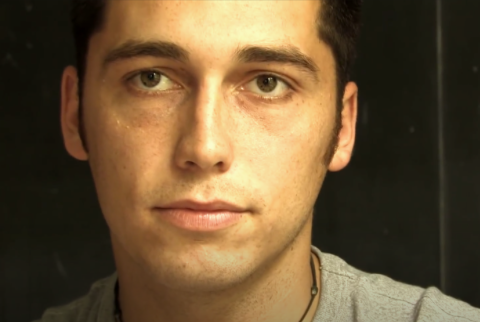
I want to share a personal story with you
It's a story about an experience that influenced the inception of my ideas.
Read moreIt's a story about an experience that influenced the inception of my ideas.
Read moreIn 2007, I neared the end of my undergraduate experience at Rutgers. I needed two credits to complete my degree. It seemed as if I was standing at the end of a hallway surrounded by closed doors. I said to myself, “Okay. So, now what do I do?” There I was with no meaningful work opportunities on the horizon, few marketable skills, and little hope. In that moment, I decided to dropout of college.
18 months went by before coming to my senses, “Just take the last class. Get it over with. Move on to the next chapter.” Actually, those were my mother’s words. Thanks, mom!
I went online to register for my last class. I searched for what looked like the easiest. I found a course that met 6-7 hours per day, everyday, for two weeks. I was sure this was the best choice to show up, sleep through class, and get my diploma.
In August 2009, I walked into the class on the first day. To my surprise, there were no desks. The chairs were in a circle. Video cameras surrounded the room facing the circle. It became quite clear that I would not be sleeping through this class. Here is a video that tells the story of the class and shows us at work together…
I found myself immersed in a new pilot program designed by the previous chair of the English Department who had made a name for himself as a nationally recognized higher education reformist. He received funding to launch a culture lab and experiment with a new approach for reimagining higher education.
The class was sponsored by Apple. Participants were each given a backpack that contained a 17-inch Macbook Pro, video camera, and external hard drive. An Emmy winning pioneer in backpack video journalism, Bill Gentile, trained us in Final Cut Pro, in-depth and impromptu interviews, and how to leverage ethnographic research for storytelling.
It was an organic environment. A safe space for experimentation. A place where leaders encouraged us. Where I heard things like, “Question everything. Don’t accept what’s handed down to you. Find out for yourself. Go your own way. Here are a few of the tools you may need along the way.” We were surrounded by mentors, coaches, and professors with a ratio of approximately 1 leader for every 4 students.
Anytime I asked, “Am I doing it right? Like this, right?” The leadership refused to give a seal of approval. Reflecting back on these moments are a beautiful thing. This was one of the first times I was confronted with ambiguity and not-knowing and being left to wonder. It wasn’t about right or wrong, yes or no. It was about building self-trust and confidence. It was about swimming in the ambiguity to learn the world is not black or white. It is grey and often messy. It’s complex.
I learned how to collaboratively use new media, technology, and the internet to immerse myself in the local community to analyze complex social problems. The service projects I created in the community reconnected me with my humanity. Listening to diverse groups of stakeholders share their stories led to cultivating a deep sense of empathy. It was as if I invited each person into the home within myself and with each relationship came a deeper understanding of the human experience. I woke up in the morning and went to sleep at night intrinsically motivated to serve.
It was liberating.
After the two week class ended, I met with the culture lab director to share my state. I said, “I didn’t realize it before, but this is what I have been looking for.” He invited me to come back and work from the lab as much as I wanted. I invested the next nine months immersed in the local community while refining my craft. I learned to pursue my passion, cross pollinate, pull from different skill sets, and ask for support when hitting roadblocks.
The culture lab served as a preincubation pipeline for me. I was able to access the tools and support to build my own bridge across the gap between education and economy. With on-demand access to cutting edge facilitators and production equipment I became the storyteller of the city.
90 days after graduation, I filed the incorporation papers for my first social enterprise. It was an online hyperlocal newspaper that existed to bridge the gap between the university and the surrounding communities. I named it moxieTODAY. It quickly spun-off into the university’s first online media outlet “Rutgers Today”. I hosted art and music events in my home…
The university granted me the use of a private new media studio, and the English Chair invited me to design the curriculum for, and teach, my first undergraduate course.
“I’d like you to teach the undergraduates what you’re learning.” He said to me.
“Should I make a syllabus?” I asked.
“I don’t know. What are your thoughts?” He ambiguously replied.
I picked up the project and ran with it. Here’s a short video from my first cohort in 2010.
Reflecting back on the culture lab as my “preincubation pipeline”, I notice how the learning ecosystem influenced my entrepreneurial intent in a unique way.
Something magical happened to me where I began to reconnect with my humanity. I cultivated empathy through learning to be a listener and an observer. I learned the world is not black or white, red or blue, democrat or republican, yes or no. It’s actually quite gray and messy and complicated. I began to evolve. To notice. To be.
The person I was prior to entering the last class was a different person than the one who completed the class two weeks later. This transformation seemed to have brought with it a specific entrepreneurial intent motivated by love, care, service, alignment, hope, and opportunity. Having these values instilled – or, perhaps, awakened – within me influenced the inception of my ideas, my ways of being, my emotions, and my decisions. It invited me onto a path of becoming more human again.